
General
Reading Against the Current: Rebuilding Deep Attention in a Fragmented World
The sentence is still there, exactly where you left it. You return to the top of the paragraph and begin again. Halfway through, a vibration crosses the table. You do not pick up the phone, but you wonder who sent the message. A few lines…
The sentence is still there, exactly where you left it.
You return to the top of the paragraph and begin again. Halfway through, a vibration crosses the table. You do not pick up the phone, but you wonder who sent the message. A few lines later, you remember an email that needs an answer. Then a phrase in the book suggests something to search for, and the search opens into three tabs, a recommendation, and an article you save for later.
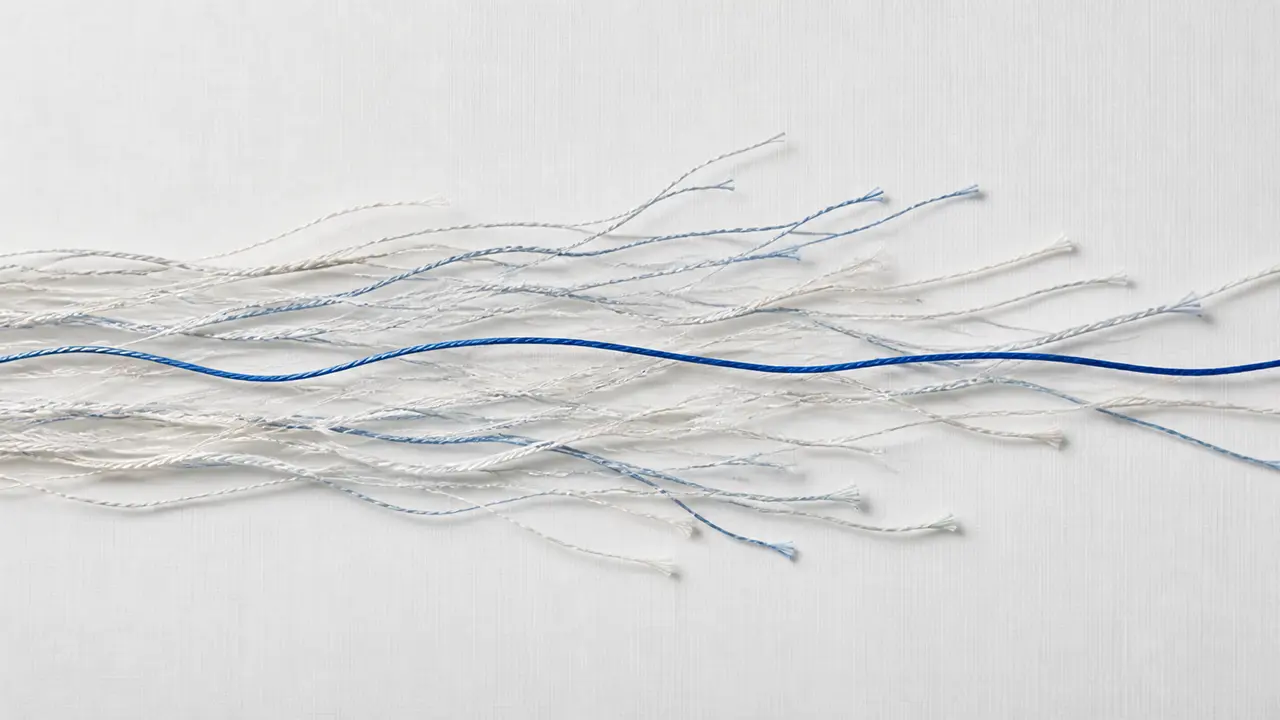
When you finally look back at the page, the sentence is waiting.
Nothing dramatic has happened. No one forced the book from your hands. Yet the quiet continuity required for reading has been divided into pieces.
This experience is often presented as proof that people can no longer concentrate. That conclusion is too simple. Attention is not a fixed quantity that modern life has permanently destroyed. It changes with context, fatigue, interest, expectation, practice, and the environment around us.
Someone who struggles through ten pages of a novel may spend an uninterrupted hour repairing a bicycle, drawing, cooking, playing a difficult game, or following an argument about a subject they love.
The capacity remains. What has changed is the current running against it.
Deep reading asks us to remain with something that does not constantly announce its value. It may delay its rewards, resist easy summary, or build an argument whose meaning appears only after several pages. In an environment filled with faster alternatives, staying becomes a deliberate act.
The task is not to return to an imaginary age when everyone read patiently beside a window. It is to rebuild a form of attention suited to the world we actually inhabit.
What Deep Reading Really Requires
Deep reading is sometimes confused with reading slowly, finishing difficult books, or choosing paper over screens. None of these guarantees depth.
A person can move slowly through a chapter while thinking about something else. Another can read quickly and remain completely absorbed. A printed book can be skimmed, while a demanding essay can be studied closely on a tablet.
The defining quality is continuity.
When we read deeply, we hold earlier details in mind while meeting new ones. We notice when an argument changes direction. We allow an image from one chapter to gather meaning in another. We tolerate temporary confusion instead of demanding immediate clarity.
This kind of reading is not passive consumption. It is sustained collaboration between the reader and the text.
That collaboration needs enough uninterrupted time for the internal world of the text to acquire weight. The first few minutes may feel shallow because part of the mind is still facing outward, listening for novelty. Only after remaining does the book begin to feel more substantial than the alternatives surrounding it.
Fragmentation Is Not a Character Flaw
Much of modern reading happens inside systems designed around movement.
A page contains links. A message appears over it. A feed waits one gesture away. Even when we ignore these invitations, we remain aware that we could leave.
In one experiment, phone notifications disrupted performance on an attention-demanding task even when participants did not interact with the device. The alert itself was enough to introduce task-irrelevant thoughts. The study does not prove that every notification ruins a reading session, but it demonstrates that an interruption can matter before we respond to it.
Leaving a text also has a cost beyond the seconds spent elsewhere. Research on task switching found that people had difficulty fully moving their attention away from unfinished work, and that this remaining “attention residue” could impair performance on the next task. Those experiments studied work tasks rather than reading, but the mechanism is recognizable: part of the mind remains with the message, search, or unfinished conversation after our eyes return to the page.
This does not justify declaring that technology has permanently damaged the human mind. Research connecting heavy media multitasking to broad, lasting deficits in cognitive control remains mixed, with reviews finding small or inconsistent relationships. The evidence is more complicated than the popular story suggests.
The immediate problem is simpler. Deep reading competes poorly when departure is effortless, interruptions are unpredictable, and every pause offers a faster reward.
This is an environmental problem before it is a moral one.
Skimming Is Useful—Until It Becomes the Only Mode
Quick reading is not inferior reading. We scan instructions, compare options, check facts, monitor conversations, and move between sources because those tasks require speed.
The difficulty begins when one mode becomes the default for every kind of text.
Skimming asks:
Is there anything here for me?
Deep reading asks:
What is this trying to become?
The first searches for immediate relevance. The second allows relevance to emerge.
When most information is evaluated within seconds, we may bring the same expectation to a novel, essay, or history. A paragraph that does not immediately reveal its purpose begins to feel inefficient. Description looks like delay. Complexity looks like poor communication. Uncertainty feels like a problem the writer should have removed.
But some ideas cannot be reduced without being changed. Some emotional truths need a scene rather than a summary. Some arguments require us to hold competing possibilities without rushing to settle them.
The cost of fragmentation is therefore not merely that we finish fewer books. It is that we become less willing to remain with meanings that arrive gradually.
Screens Are Not the Villain
Turning the problem into a conflict between books and screens is emotionally satisfying and practically unhelpful.
Digital reading has made enormous libraries available to people who may be limited by geography, cost, storage, eyesight, or other access needs. Readers can enlarge text, search unfamiliar terms, hear a passage read aloud, and carry hundreds of books in one small device.
A phone can deliver distraction, but it can also hold a poem worth returning to for years.
Research nevertheless suggests that the medium can matter under particular conditions. A meta-analysis comparing equivalent linear texts found a modest comprehension advantage for paper, especially for informational material and reading under time pressure. Scrolling also appeared to contribute to the difference. The authors did not recommend abandoning digital reading; they emphasized identifying the conditions under which readers perform equally well across media.
Another study found that university students generally preferred digital texts and expected to understand them better. They performed similarly across media when identifying main ideas, but recalled supporting details more effectively from print. Preference and comprehension were not always aligned.
The lesson is not that paper is intelligent and screens are shallow. It is that different environments encourage different behaviors.
A printed book creates continuity almost by accident. It cannot display an incoming message or offer a more exciting paragraph. Its limitations become a form of shelter.
Digital reading may require us to build that shelter ourselves.
Design the Conditions Before Testing Your Willpower
Many attempts to rebuild attention begin with an idealized reader.
This reader wakes early, studies demanding literature for an hour, takes elegant notes, remembers everything, and never reaches for a phone. The real person begins with enthusiasm, misses two days, and concludes that the habit is broken.
A better practice begins with the environment rather than the fantasy.
Choose the text before the session
Do not spend the first ten minutes deciding what to read. Select one book, essay, or chapter in advance.
Give the session a question:
- What is the author trying to explain?
- What changes in this chapter?
- Which claim do I expect to disagree with?
- What do I want to understand before I stop?
A question gives attention somewhere to gather.
Remove invitations to leave
Put the phone beyond reach rather than face down beside the book. Silence notifications on the reading device. Close unrelated tabs and use a focused reading view when available.
This is not a demonstration of discipline. It is the removal of unnecessary negotiations.
Begin below your ambition
Choose a period you can repeat without drama. Fifteen or twenty minutes may be enough at first. Stop treating a modest session as preparation for the “real” practice. It is the practice.
Once that period feels natural, extend it gradually. The first objective is not to finish a book. It is to rebuild trust between intention and action: you decided to read, and then you read.
Keep one capture surface
Use a margin, index card, or single notes page for questions and ideas. Do not open a search whenever the text mentions something unfamiliar. Mark the question and continue unless understanding the next paragraph genuinely depends on the answer.
The goal is to prevent curiosity from becoming an exit route.
End with recall
Close the book and write three brief lines:
- What was the main movement of the section?
- What surprised or challenged me?
- What remains unclear?
Looking back at highlighted sentences feels productive, but attempting to recall the text reveals what actually remained.
Make Returning Part of Reading
Drifting is not failure. It is part of the practice.
You will reach the bottom of a page and realize that you remember nothing. You will think about dinner, work, an old conversation, or a sound outside.
Research generally finds a negative relationship between mind wandering and reading comprehension, but the relationship is not absolute. Interest, motivation, working memory, text difficulty, and the way mind wandering is measured all matter. A recent meta-analysis describes a modest and highly contextual connection rather than a universal law.
The useful moment is the return.
Notice that attention has moved. Avoid turning the observation into a verdict about your discipline or intelligence. Find the last sentence you remember, go back, and continue.
Concentration in ordinary life is rarely an untouched state. It is closer to a series of recoveries. A practiced reader is not someone whose mind never wanders, but someone who can return without creating another distraction out of self-criticism.
Leave a Thread for the Next Session
Every reading session should not have to begin from zero.
At the end, write one or two sentences:
- What is happening now?
- What question is the text asking?
- What do I expect to happen next?
- Which idea needs more thought?
For nonfiction, record the main claim and the strongest question you would ask the author. For fiction, note a change in a character, relationship, or atmosphere. For poetry, copy one image that continues to echo after the page is closed.
This is especially useful when a session ends unexpectedly. Studies of interrupted tasks found that briefly planning how to resume could reduce attention residue and support performance during the interruption. The researchers called this a “ready-to-resume” plan.
Applied to reading, the note can be extremely small:
Resume at the disagreement about memory; compare it with the example on the previous page.
A bookmark saves your place. A short note saves your involvement.
Build a Reading Ladder
If sustained reading currently feels difficult, beginning with the most demanding book you own may teach the wrong lesson.
Build a ladder instead.
Start with writing that has momentum: narrative nonfiction, essays on a subject you already care about, short stories, memoir, or an absorbing novel. Once the practice feels stable, introduce work that asks for more patience—a slower novel, a longer argument, or an unfamiliar period of history.
A useful reading life contains variety:
- Something that welcomes you.
- Something that teaches you.
- Something that resists you.
The welcoming book keeps the practice alive. The instructive book expands what you know. The resistant book reveals the edges of your current habits.
Abandoning a book can also be an intelligent decision. Not every unfinished title is evidence of failed attention. Sometimes the writing is not useful to you, or this is simply the wrong time for it.
Before leaving, ask one question:
Am I genuinely uninterested, or have I reached the point where the book is asking me to work?
Either answer can be legitimate. The value lies in knowing which one is true.
Do Not Turn Reading Into Another Dashboard
Reading culture increasingly borrows the language of productivity: annual targets, streaks, page counts, completion rates, and lists of finished titles.
These tools can motivate, but they can also reproduce the hurry that deep reading is meant to interrupt.
A person can finish fifty books and remember very little. Another can spend a month with one book that permanently changes the questions they ask.
Count if counting brings joy. Stop when measurement begins to govern the experience.
A more revealing record might contain passages copied, questions raised, ideas revised, and books returned to. The deepest sign of reading is not that a title moved from “current” to “finished.” It is that something from the book continues to live beyond the session—in a conversation, a decision, an image noticed on the street, or a new discomfort with an old certainty.
Attention Is a Form of Hospitality
To read deeply is to allow another mind to set the pace for a while.
The writer may lead us through details we would have skipped, ask us to care about someone we would not have noticed, or hold us inside a question we would prefer to settle quickly.
We remain free to disagree. Deep attention is not submission. It is the courtesy of understanding something before deciding what it is worth.
That courtesy extends inward as well.
When we create time to read, we give our own minds permission to develop a thought without immediately displaying, measuring, or monetizing it. We enter a space where not every response must be published and not every minute must produce visible evidence.
The world will continue to interrupt. Messages will arrive. Feeds will refresh. Urgency, both real and manufactured, will keep asking us to look up.
The goal is not to escape the current forever. It is to remember that we do not have to be carried by it every moment.
Place the phone beyond reach. Open the book. Find the sentence that was waiting. Read it once, then read the next.
At first, the act may feel small: one page held together, one thought allowed to finish. Stay long enough, and something quietly changes.
The world does not become less fragmented. Your attention becomes more capable of choosing what deserves to remain whole.